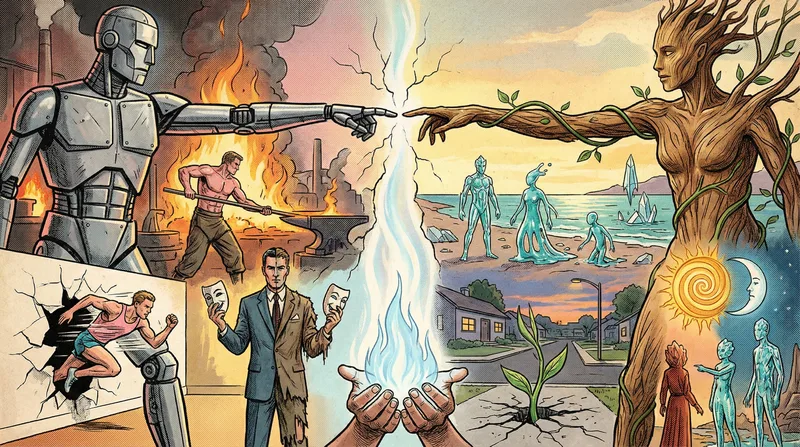
Counterparts
Album Context
Counterparts is Rush's heaviest album since the 1970s — a conscious, aggressive response to the grunge revolution swirling around them. Released on the same day as Pearl Jam's Vs. (October 19, 1993), it debuted at #2 on the Billboard 200, kept from the top spot only by Pearl Jam. That a progressive rock band could chart alongside the biggest grunge act in the world spoke volumes about the album's raw power.
The band returned to producer Peter Collins (Power Windows, Hold Your Fire) but paired him with a new recording engineer: Kevin "The Caveman" Shirley, chosen for his raw, natural sound. Shirley's hiring was dramatic — stranded at the airport, he told Rush's management he needed an answer immediately or he was flying back to Australia. They called back in thirty minutes and said yes. Shirley talked Lifeson into recording his guitars in the studio room rather than the control room for the first time in 12 years. Lifeson was transformed: "You could feel the wood of the guitar vibrating against your body."
Lee switched back to his 1972 Fender Jazz Bass (the same one that had debuted on "Tom Sawyer"), and Lifeson combined Les Paul, Telecaster, and PRS guitars — often layering them together to create a single massive sound. The band was openly influenced by Primus (who had opened for them on the Roll the Bones tour) and by Pearl Jam. Orchestration by legendary film composer Michael Kamen (Die Hard, Robin Hood) appears on "Nobody's Hero."
Counterparts went gold within a month and was certified platinum. "Stick It Out" hit #1 on the Album Rock Tracks chart. "Leave That Thing Alone" earned Rush's third Grammy nomination for Best Rock Instrumental Performance. The album's cover — a nut and bolt — is a visual pun on "counterparts" that proved to be Rush's most innuendo-laden artwork, with the liner notes including provocatively paired words like "bump and grind" and "bound and gagged."