2112
Album Context
2112 is where Rush's mythology was forged — born from desperation, defiance, and a refusal to compromise. After the commercial disaster of Caress of Steel, the band was in dire straits. Finances were so tight they couldn't draw their meagre $125 weekly salary for months. Mercury Records, their label, seriously considered dropping them. Manager Ray Danniels had to fly to Chicago and personally plead with the label to exercise their option for one more album.
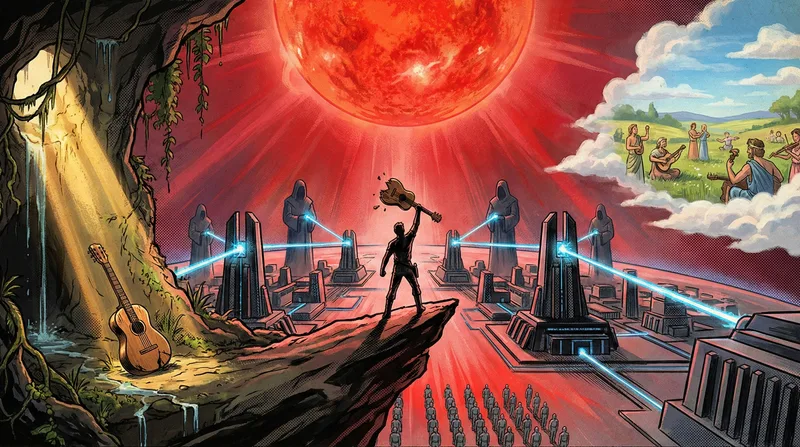
The label made it clear: no more concept songs, no more side-long epics. Make something commercial and radio-friendly. The band's response was to go out, as they put it, "in a blaze of glory" — they devoted the entire first side to a 20-minute science fiction epic inspired by Ayn Rand's novella "Anthem." As Neil Peart later said, the album became "the skeleton key that let us open that door."
The material was written in backstage dressing rooms, hotel rooms, and the band's van while still touring Caress of Steel through the fall and winter of 1975. Lifeson recalled developing "The Temples of Syrinx" backstage at a gig in Sault Ste. Marie, Ontario, while the opening act Mendelson Joe watched. The "Overture" was the last piece to be written. In January 1976, the band entered Toronto Sound Studios with Terry Brown, now equipped with 24-track capability and a Neve console. Recording took about four weeks.
The gamble paid off spectacularly. Within a month of release, the album sold 100,000 copies. It reached #5 in Canada and #61 on the Billboard 200, going gold by November 1977 and eventually reaching triple platinum — Rush's second-biggest seller behind only Moving Pictures. The "Starman" logo by Hugh Syme became one of rock's most iconic images, later appearing on a Canadian postage stamp in 2013. Lifeson later reflected that 2112 was the first Rush album that "really sounded like Rush." The success bought the band their creative independence forever — no label would dare tell them what to record again.