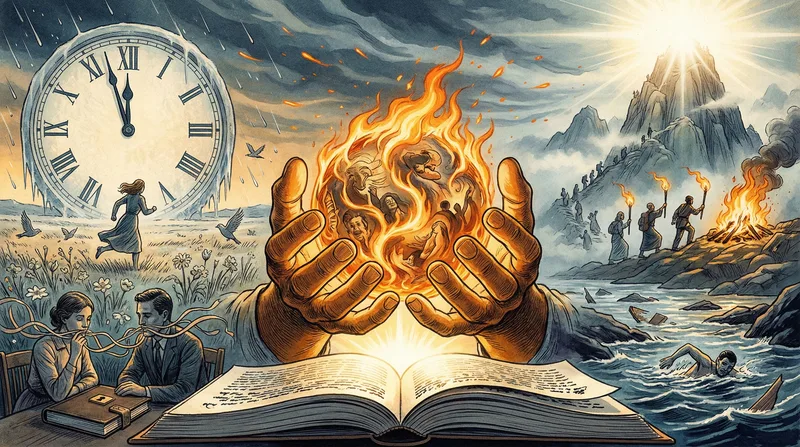
Hold Your Fire
Album Context
Hold Your Fire is Rush's most polarizing album — the point where their synth-era transformation reached its logical extreme. The keyboards and electronic textures are more prominent than ever, Lifeson's guitar is at its most restrained, and Peart's lyrics shift toward themes of time, instinct, and emotional vulnerability. For some fans it's a lost masterpiece of sophisticated pop-rock; for others, it's the moment Rush lost the plot.
The album grew from scattered beginnings in the fall of 1986. Peart wrote lyrics in a cottage, Lee experimented with composition software on his Macintosh, and Lifeson recorded ideas at home. Peart's overarching theme was time — its passage, its value, the human tendency to let it slip away unappreciated. The first lyric he wrote was "Time Stand Still." Sessions took place across four studios in three countries, from January to April 1987, with mixing in Paris.
Producer Peter Collins pushed the band to write a tenth track when they arrived at the studio with nine songs. The result was "Force Ten" — co-written with Pye Dubois (the Max Webster lyricist who had co-written "Tom Sawyer") — which was composed on the last day of pre-production, December 14, 1986. Aimee Mann of 'Til Tuesday was brought in to sing on "Time Stand Still" after the band's first choices — Cyndi Lauper, then Chrissie Hynde — were unavailable. Mann was paid $2,000 for her contribution.
Hold Your Fire reached #13 on the Billboard 200 and was the last Rush studio album released by Mercury Records, ending a partnership that stretched back to 1974. The insert photo of the original release cleverly references several older Rush album covers, including the fire hydrant from Signals and the TVs from Power Windows. While commercial reception was solid, the album marked the point where many fans began vocal disagreement with the band's direction — setting the stage for the course correction that would begin with Presto.