Roll the Bones
Album Context
Roll the Bones arrived on the momentum of Presto's creative renewal, and it delivered commercially in a way its predecessor hadn't. The writing process began at Chalet Studios in Claremont, Ontario, where the band spent two and a half months with their usual division of labor — Lee and Lifeson on music, Peart on lyrics in a separate room. The energy from the Presto tour, which the band had kept deliberately short but found unexpectedly reinvigorating, carried directly into the sessions.
Peart described the recording process as sparking a "new conviction, a sense of rebirth" within the group. Lee called the sessions "very positive" and "optimistic." The album was recorded with co-producer Rupert Hine (returning from Presto) between February and May 1991 at Le Studio and McClear Place. Basic tracks were completed in just two weeks — a dramatic acceleration from the months-long sessions of earlier albums — reflecting a deliberate shift toward spontaneity over perfectionism.
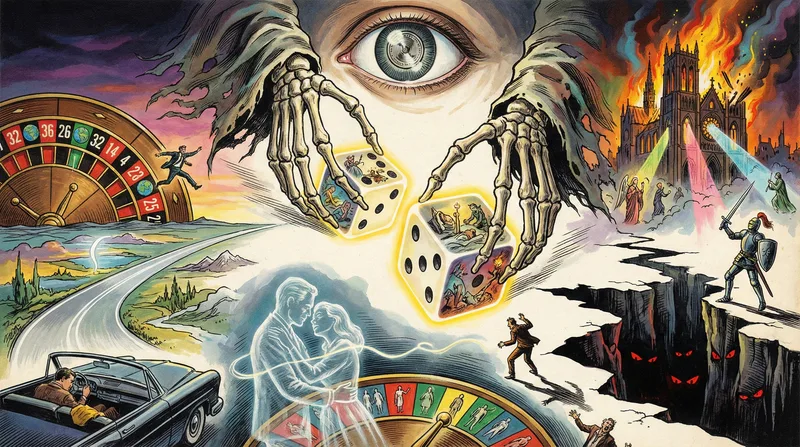
The album's overarching theme is chance — taking risks, rolling the dice, accepting that fate is partly beyond our control. This is clear in titles like "You Bet Your Life," "The Big Wheel," and "Ghost of a Chance." The cover, designed by Hugh Syme, depicts a boy kicking a skull down a sidewalk with the word "Rush" spelled out in dice on a wall behind him — it won the 1992 Juno Award for best album cover design.
Roll the Bones reached #3 on the Billboard 200 — Rush's highest chart position since Moving Pictures a decade earlier. It was certified platinum for one million copies sold, making it the last Rush album to achieve that milestone. The liner notes contain the cryptic phrase "Now it's dark" — a reference to David Lynch's Blue Velvet. A running gag from Power Windows continues: that album was "brought to you by the letter M" (many song titles starting with M); this one reads "brought to you by the letter B."