Caress of Steel
Album Context
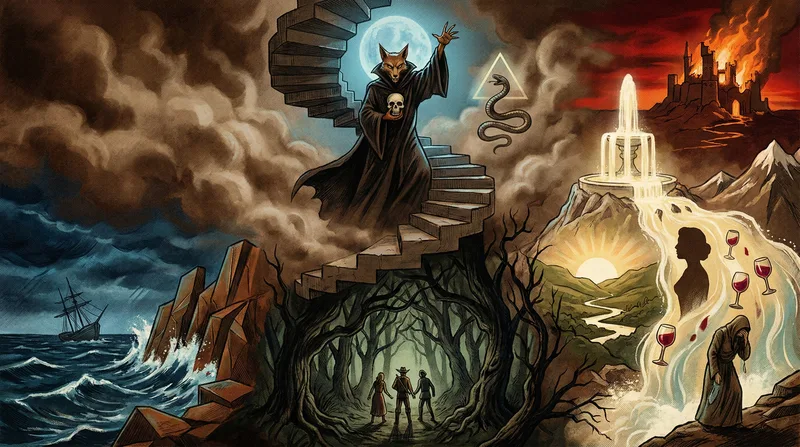
Caress of Steel was Rush's great creative gamble — and commercially, it nearly destroyed them. Fresh off the Fly by Night tour, the band entered Toronto Sound Studios in the summer of 1975 feeling, in Peart's words, "serene and confident." They took the extended and conceptual elements introduced with "By-Tor & the Snow Dog" and made them the album's central focus, devoting nearly the entire second side to "The Fountain of Lamneth," a 20-minute concept piece, and much of side one to another epic in "The Necromancer."
This was also the first Rush album with cover art by Hugh Syme, beginning a collaboration that would last the rest of the band's career. The original artwork was a monochromatic pencil drawing, but the label altered it — adding chromium lettering and converting it to a brown sepia tone because they felt the original wasn't "rock and roll" enough. The cover was supposed to be printed in silver to evoke "steel," but a printing error turned it gold. This mistake has never been corrected on any subsequent pressing. The gatefold included a Latin phrase from Christopher Marlowe's Doctor Faustus, and the album was dedicated to the memory of Rod Serling, creator of The Twilight Zone.
Mercury Records was horrified by the finished product; they wanted another Fly by Night. Sales were dismal — by March 1976, it had sold only about 40,000 copies in Canada, fewer than its predecessor. The subsequent tour was nicknamed the "Down the Tubes Tour" by the band because venues kept getting smaller and attendance kept dropping. The label pressured them to make a more commercial record next.
Instead, Rush doubled down. Vowing to "fight or fall," they went even further into progressive territory on their next album — which turned out to be 2112, the record that saved their career. Despite its commercial failure, Caress of Steel is beloved by hardcore fans as the moment Rush committed fully to artistic ambition over commercial safety. It didn't achieve gold certification in the U.S. until December 1993, nearly two decades after its release.